

Pakistan's $3.3 billion Green Pakistan Initiative (GPI), launched by the government, aims to develop six canals to irrigate millions of acres of barren land. However, the project has encountered strong opposition in Sindh, initially from Sindhi nationalist parties, followed by the Pakistan People’s Party (PPP), which later organised its own protests. In mid-March, the Sindh Assembly also passed a resolution against the initiative.
Concerns over unequal water distribution have sparked opposition, with the 176 km Cholistan Canal in Punjab becoming the most contentious project, set for completion by 2030 at an estimated cost of $783 million. The canal will rely on floodwaters for four months each year, while drawing river water from Punjab during the remaining months—both sourced from the Indus Basin Irrigation System (IBIS).
Water allocation has long been a contentious issue in Pakistan, with Sindh, as the lower riparian province, fearing that upstream diversions of the Indus River could jeopardise its agriculture and livelihoods. The conflict between Punjab and Sindh over water rights dates back more than a century, beginning in 1901 when the Indian Irrigation Commission restricted Punjab’s water usage without Sindh’s consent. The dispute escalated in 1919 when Punjab was prohibited from initiating irrigation projects until Sindh’s concerns were addressed. A subsequent report by the British Indian government mandated the construction of the Sukkur Barrage as a prerequisite for any future irrigation developments in Punjab.
Despite Sindh’s objections, President Asif Ali Zardari approved the construction of six canals in July 2024, emphasising their role in agricultural development and food security. Among them, the Cholistan Canal, with a capacity of 4,120 cusecs, will require 1.2 million acres of land, primarily in the Cholistan Desert, further escalating ecological and political tensions.
The Indus Basin Irrigation System (IBIS), one of the world's largest contiguous irrigation networks, sustains approximately 44 million acres (18 million hectares) of farmland in Pakistan through three major multipurpose storage reservoirs, 19 barrages, 12 inter-river link canals, and 45 major irrigation canals. However, the once-mighty Indus River now faces severe strain from excessive water diversion, climate change, and governance challenges, putting the Indus Delta—a crucial ecological zone—at risk due to dwindling freshwater inflows. Without urgent and strategic policy interventions, including a critical reassessment of projects like the Cholistan Canal, the environmental and socio-economic repercussions could be devastating.
Historically, the Indus River discharged approximately 80 million-acre feet (MAF) of water into the Arabian Sea, ensuring a delicate ecological balance that sustained agriculture, fisheries, and local communities. However, decades of infrastructure developments—including barrages, dams, and link canals—have significantly reduced the river’s natural flow. Today, annual outflows to the sea have fallen below 1 MAF in most years, leading to intensified seawater intrusion, accelerated land degradation, and severe biodiversity losses.
Punjab has historically utilised a greater share of water resources for irrigation and large-scale projects, often leading to Sindh's concerns over water security
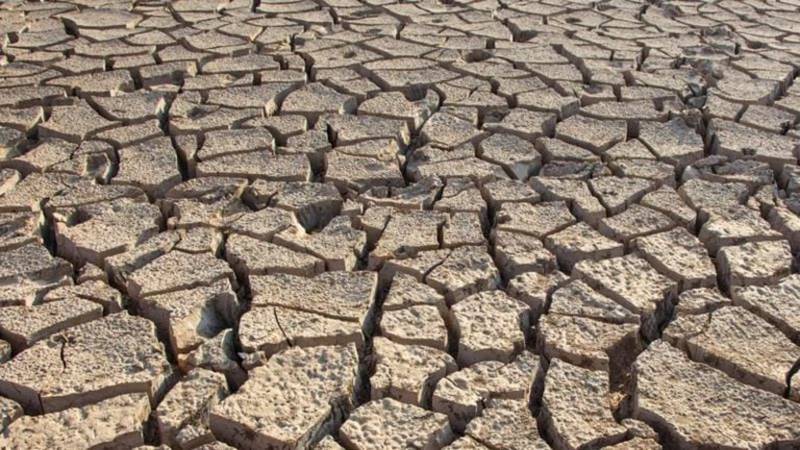
One of the most visible impacts of this crisis is the shrinking of the Indus Delta, which once spanned over 600,000 hectares. Coastal communities in areas like Keti Bandar, Kharo Chan, Shah Bandar, and Jati are witnessing increased saltwater intrusion, rendering more than 1.3 million acres of fertile land barren. As freshwater fails to counteract the advancing sea, farmers are abandoning their ancestral lands, triggering climate-induced migration and exacerbating socio-economic instability.
Environmental repercussions extend beyond agriculture. The Indus Delta was once home to the world’s seventh-largest mangrove forest, a crucial natural barrier against coastal erosion and an essential habitat for marine biodiversity. However, rising salinity and reduced freshwater inflows have severely damaged these forests, escalated coastal erosion and threatened marine life. The collapse of mangrove ecosystems has significantly impacted the fishing industry, deepening economic distress for coastal communities.
The 1991 Water Apportionment Accord was designed to ensure equitable water distribution among Pakistan’s provinces. It included a mandated minimum outflow of 10 MAF downstream of the Kotri Barrage to curb seawater intrusion. However, this provision has largely remained unimplemented due to inter-provincial disputes.
As the upper riparian, Punjab has historically utilised a greater share of water resources for irrigation and large-scale projects, often leading to Sindh's concerns over water security. The recently proposed Cholistan Canal project in Punjab has further fueled these tensions, as Sindh perceives such developments as potential threats to its already limited water share.
Before this dispute, another major water controversy with similar concerns also pitted Punjab against all other provinces in the country—the Kalabagh Dam conflict. As one of Pakistan’s most contentious water issues, it primarily set Punjab against Sindh, Khyber Pakhtunkhwa (KP), and Balochistan. Proposed as a massive hydroelectric and water storage project on the Indus River, its proponents—mainly from Punjab—argued that the dam would help mitigate water shortages, enhance agricultural output, and generate crucial electricity. However, Sindh strongly opposed the project, fearing it would further diminish downstream water flow, worsen desertification, increase seawater intrusion, and devastate agriculture and fisheries. Similarly, KP objected due to concerns that parts of Nowshera district could be submerged, while Balochistan feared an unfair distribution of water resources. The project has remained stalled for decades due to intense political opposition, with multiple provincial assemblies passing resolutions against it, making it a lasting symbol of Pakistan’s water conflicts and inter-provincial mistrust.
The Indus River and its delta, already teetering on the edge of ecological collapse due to climate-induced changes and unsustainable water management, now face an added layer of complexity with the Cholistan Canal project
Climate change is compounding these challenges, making water distribution increasingly unpredictable. Research indicates a westward shift in the Indian monsoon, reducing rainfall in northeastern regions while intensifying precipitation in western areas. This shift has heightened Sindh’s vulnerability to extreme weather events, including prolonged droughts and catastrophic floods. The devastating floods of 2010, 2011, 2020, and 2022 underscore the urgent need for improved water storage and drainage infrastructure. The 2022 monsoon alone brought rainfall anomalies exceeding 460% in Sindh, displacing thousands and submerging vast agricultural lands, highlighting the necessity of climate-resilient water management strategies.
Given the growing water crisis, Pakistan must adopt a balanced and forward-thinking strategy that ensures both sustainable development and ecological conservation. Key policy measures should include revisiting the 1991 Water Apportionment Accord to reflect current hydrological realities and climate challenges. The government must ensure a minimum outflow of at least 10 MAF, with gradual increases to align with environmental sustainability goals.
Instead of relying solely on large dams, Pakistan should prioritise decentralised water storage solutions, such as check dams and underground reservoirs, to improve water retention and minimise wastage. Additionally, a robust mangrove rehabilitation program, led by community-driven replanting efforts, is essential for restoring coastal ecosystems. This initiative will not only help prevent erosion but also sustain fisheries, which play a crucial role in local economies.
The Government of Sindh has already taken steps in this direction, with notable progress. Moreover, enhancing drainage infrastructure, clearing irrigation canal blockages, and implementing innovative flood management strategies will be vital for improving water distribution.
At the agricultural level, farmers should be encouraged to implement advanced irrigation methods, such as drip irrigation and laser land leveling, to improve water efficiency and reduce wastage. Additionally, options like desalination and wastewater recycling can further support sustainable water management.
Pakistan can draw valuable lessons from successful global water management models, such as the Delaware River Basin in the U.S., where controlled reservoir releases have effectively mitigated saltwater intrusion. Implementing real-time monitoring of seawater intrusion and integrating climate change projections into water management strategies could help determine optimal downstream flows at Kotri Barrage in real time. This approach would support sustainable water distribution and ecosystem preservation under the oversight of IRSA.
The Indus River and its delta, already teetering on the edge of ecological collapse due to climate-induced changes and unsustainable water management, now face an added layer of complexity with the Cholistan Canal project. If decisive action, including a reevaluation of this project, is not taken, further degradation of this vital ecosystem will lead to irreversible environmental damage and exacerbate socio-economic disparities. The federal government must urgently reassess its water policies, ensure equitable resource distribution, and implement climate-adaptive solutions, including a critical review of the Cholistan Canal's impact. By prioritising a science-based, collaborative approach that considers the full spectrum of climate-related challenges and project-specific impacts, Pakistan can safeguard its water resources, preserve the Indus Delta, and secure a resilient future for its people.