

Michelangelo, a young apprentice, is assigned menial tasks such as grinding pigments and preparing plaster. Yet, in silence, he observes every movement of his master’s hand, absorbing the craft stroke by stroke. One day, he secretly paints a copy of one of Ghirlandaio’s works, most often described as the head of a female figure or an angel. In The Agony and the Ecstasy, Irving Stone writes that Michelangelo worked feverishly and obsessively on this copy, striving to reproduce every line and shade with absolute fidelity — not to deceive, but to learn. When he presents the painting, Ghirlandaio cannot at first tell it apart from the original. Astonished by the precision and sensitivity of his pupil’s hand, he later confides, on his deathbed, that he had long known of the copy and that it was magnificent.
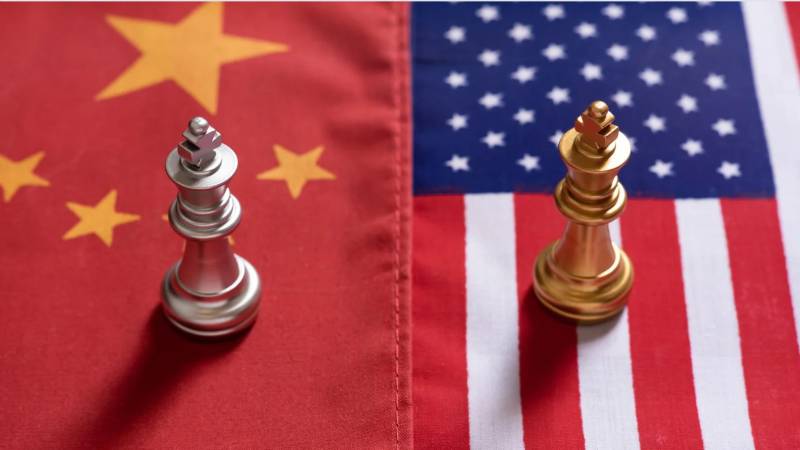
Now, think of this story in the context of the United States and China today. Does the United States have the humility, or the audacity, to acknowledge that China has surpassed the master in technological mastery?
Regardless of the outcome of the Trump–Xi meeting at the ASEAN Summit in Kuala Lumpur, scheduled for Thursday (I write this on Wednesday), one thing remains certain: as long as the United States controls the global financial system, its status as the leading superpower will remain unchallenged. China understands this well. It shows little appetite for dismantling that financial order, despite BRICS’ efforts to build a parallel system of trade less dependent on the US dollar, a framework that, for now, remains largely confined to the so-called Global South.
Ironically, however, the very global financial system that the United States built to serve its hegemonic ambitions has begun to turn against it.
Advancements in artificial intelligence and other technologies have changed the rules of the game. In the realm of trade and economics, rare earth materials have taken centre stage as one of the proposed agenda items for the Trump–Xi meeting, after China imposed an embargo on their export to American companies. China’s near-total monopoly over the extraction and processing technologies for these materials poses a serious challenge to several US industries, including defence.
The United States must endure the agony of carrying the burden of its waning global influence, even as it continues to enjoy the ecstasy of controlling the global financial system it once created
China’s leadership in advanced weaponry, as recently demonstrated by Pakistan during its four-day armed conflict with India, has also transformed conventional notions of warfare. The multi-domain operations deployed by the Pakistan Army and Air Force, supported by China’s Beidou satellite technology, have compelled military analysts worldwide to rethink the conduct of modern warfare. The Pakistan Air Force (PAF) employed cyber and electronic warfare techniques to jam Indian communications and data links, rendering rival forces “digitally blind” and neutralising the net-centric warfare capabilities of India’s Rafale jets.
Reports suggest that US commanders have since asked the PAF to brief them on its experience of multi-domain operations tested against Indian forces. High-level engagement between the PAF and US military leadership has notably increased. In July 2025, the PAF Chief visited the United States for discussions focused on strengthening military cooperation, strategic dialogue, and technological exchange. Even Bahrain’s Chief of Defence Staff, Lt Gen Thiab Saqer Abdulla Al-Nuaimi, has expressed interest in learning from the PAF’s experience in multi-domain warfare.
These developments have compelled India to reassess its own approach to modern conflict, resulting in the launch of Mission Sudarshan Chakra, an initiative that specifically targets the areas where Pakistan demonstrated cyber and electronic warfare superiority. In essence, this mission serves as an implicit acknowledgement of Pakistan’s claims regarding India’s losses during Operation Sindoor.
This, however, is not the first time that the United States has faced such a dilemma — a nation it once helped to learn and build technology now emerges as a formidable rival. In 1988, Clyde V. Prestowitz, a leading international business expert and trade negotiator, wrote in Trading Places that the Americans had mocked the Japanese “as nothing more than peddlers of transistor radios”. The reality of Japanese technological advancement dawned on the Americans when they discovered “that ballistic missiles cannot be targeted accurately without the use of Japanese semiconductors”. The Japanese FXS fighter jet project posed another challenge: the United States, then mass-producing F-16s at 15 million dollars apiece, managed to persuade Japan to abandon its own venture in favour of a joint programme.
But this is not 1989, and this time, it is not Japan.
That was the era when the Cold War had ended and the world had inevitably plunged into a unipolar system dominated by the United States. When China began to rise in the late 1990s and early 2000s, its products were mocked as cheap imitations of Western technologies. That perception has been swiftly dispelled. The downing of French-made Rafale jets by the Pakistan Air Force using Chinese J-10C fighters equipped with PL-15 missiles has already cast doubt on the supposed superiority of Western weaponry.
The American mindset, shaped in the post-war years when the US emerged as the world’s most technologically advanced power with vast research and development budgets, was first challenged by Japan’s economic and industrial ascent in the 1980s. Yet the geopolitical realignments of the 1990s ultimately worked in America’s favour. That, however, may no longer be the case in 2025. The United States’ mounting internal debt, coupled with its diminished industrial base, has left its economy heavily dependent on arms exports, a reliance that demands the perpetuation of global conflicts. It must also keep Russian and Iranian oil out of the market to maintain high prices, ensuring the viability of shale oil extraction, which now costs around 70 dollars per barrel and could rise to as much as 95 in the coming decade.
China, by contrast, seeks to assert peace and promote a policy of non-confrontation through its Belt and Road Initiative, a strategy designed to undercut American plans by fostering connectivity and economic stability. That is the essential dividing line between the two powers: one profits from conflict; the other from peace.
In return, the United States must endure the agony of carrying the burden of its waning global influence, even as it continues to enjoy the ecstasy of controlling the global financial system it once created.