

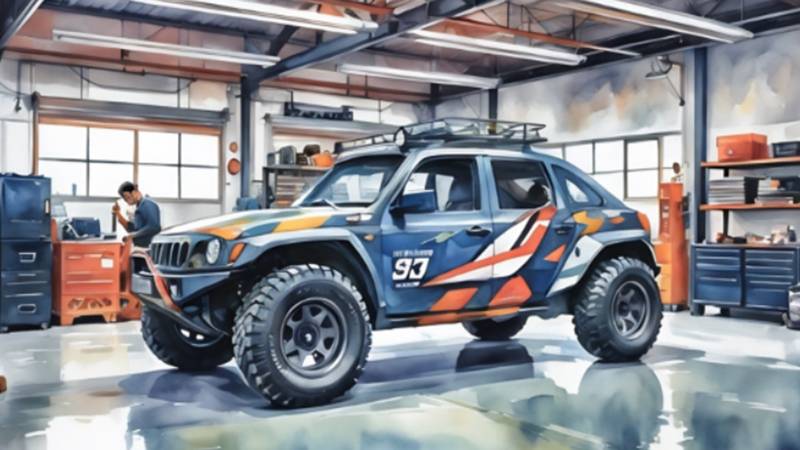
In Pakistan, passion for cars runs deeper than aesthetics or luxury—it is about performance, precision, and purpose. Across cities and rural towns, a growing community of young enthusiasts is building and tuning machines – not merely for exhibitions, but for speed, control, and the adrenaline rush of competition. Whether it is a rally-prepped jeep, a turbocharged hatchback, or a hand-built drift car, Pakistan is quietly experiencing a grassroots motorsports awakening. And yet, this entire community is operating in a frustrating vacuum—misunderstood, criminalised, and institutionally neglected. Without a single fully functional, publicly accessible racetrack in the country, these auto lovers are left with no legal option but to test and drive their creations on public streets and highways. In doing so, they unintentionally endanger themselves and others, while the state watches passively, dismissing the entire motorsport culture as reckless indulgence.
Meanwhile, billions are spent on cricket infrastructure each year—stadiums, security, academies, international tours, even VIP protocols. Let’s be frank: in Pakistan, cricket is not regarded as a sport—it is revered as a holy institution. Cricketers are national celebrities. Government officials line up to greet them after a win. The media celebrates them. And the state treats cricket as its sole athletic priority. There is nothing inherently wrong with that—cricket is beloved by millions and has earned its place in the country’s sporting fabric. But what is problematic is the complete monopolisation of state support, funding, and recognition by a single sport. In contrast, motorsport is treated like the neglected stepchild—ignored, misunderstood, and vilified. With equal potential and growing public interest, it is dismissed as the playground of “spoiled brats” or the indulgence of the elite. Where cricket is nurtured, motorsports are shunned. And the consequences are not only cultural—they’re dangerous.
This is not just a sporting issue. It is a legal and policy failure. The state’s refusal to formally recognise motorsport as a legitimate athletic discipline has created a grey area in which the entire community is seen through a lens of suspicion. Car modifications are penalised. Upgraded exhaust systems are fined. Cosmetic changes are considered potential criminal indicators. Law enforcement treats performance vehicles not as technical achievements, but as liabilities. But the law cannot operate in a vacuum of understanding. Regulation without comprehension leads to suppression. What Pakistan needs is not prohibition—but smart policy. Certification programs for modified vehicles. Compliance checks for track-only builds. Designated test-and-tune days. Registered clubs with legal protection. A racing framework grounded in safety, accountability, and technical standards.
Motorsport is not just about speed: it is an entire technical ecosystem. Engineering, fabrication, logistics, media, mechanics, design, safety – it connects to dozens of industries. Promoting it can unlock new career paths, vocational training programs, and even attract international tourism and investment
Other countries have done this. India has integrated motorsport into its national sporting framework. The UAE and Saudi Arabia have built entire economies around it. Even Nepal has recognised the value of regulated off-road events. And yet, in Pakistan, a young mechanic who builds a street-legal drift car is more likely to be harassed than encouraged. Even the government’s limited engagement with motorsports is marred by inconsistency and elitism. Each year, Pakistan hosts a handful of jeep rallies in Thal, Cholistan, Gwadar, and Sarfaranga, often organised by the Tourism Development Corporation of Punjab and other institutions. These events are heavily promoted, often televised, and briefly celebrated. Drivers are interviewed, trophies are handed out, and motorsport is momentarily allowed to exist in the national spotlight. But once the dust settles and the rally ends, so too does the respect. For the rest of the year, the same drivers are labelled as manchlay—spoiled thrill-seekers with more money than sense. Their sport is not recognised, their skills not institutionalised, and their contribution to tourism, youth engagement, and engineering education is quietly forgotten. This selective appreciation exposes a deeper problem: motorsports are only accepted when sanitised for public spectacle. The moment it leaves the desert and returns to garages and city streets; it becomes a nuisance in the eyes of the state. There is no year-round policy, no driver development programs, and no infrastructure to cultivate the sport beyond a single event.
Motorsport is not just about speed: it is an entire technical ecosystem. Engineering, fabrication, logistics, media, mechanics, design, safety – it connects to dozens of industries. Promoting it can unlock new career paths, vocational training programs, and even attract international tourism and investment. A country like Pakistan, with thousands of gifted mechanics, electricians, and car fabricators working informally, stands to benefit immensely from this industry’s formalisation. There are already young builders assembling race-ready machines in home garages using limited tools and even more limited resources. Their work is world-class in ingenuity but invisible to the state. Imagine what they could achieve with access to tracks, safety instruction, and legal recognition.
Even from an economic standpoint, the benefits are obvious. Regular drag events, autocross weekends, and track days in cities like Karachi, Lahore or Islamabad could draw massive crowds, sponsors, and media attention. Merchandise sales, tourism, and hospitality—all linked. But none of this is possible if motorsport remains locked in legal limbo and public scepticism. It is time the state rethinks its approach. Motorsport is not a reckless hobby—it is a regulated global discipline. Formula 1, MotoGP, and the World Rally Championship are followed by millions and backed by governments across the world. Why not here? The answer lies in perception and policy. Pakistan needs to stop seeing motorsport as an imported elite pastime. It must be localised, democratised, and institutionalised. Public-private partnerships can help build tracks. Federations can be tasked with governance. Safety can be legislated. And most importantly, young enthusiasts can be trained, certified, and celebrated—not punished.
A structured motorsport program would also reduce street racing and illegal car testing. When drivers have access to controlled environments, they are far less likely to test their limits on public roads. This isn’t just speculative, it has been proven in countries that invested in proper infrastructure. Not every child dreams of becoming a cricketer. Some dream of tuning engines, calculating torque curves, and mastering the art of apex cornering. These young people deserve a future too. Motorsport is not a Western fad or a spoiled brat’s hobby. It is a real sport with real discipline, real risks, and real rewards. It fosters innovation, teaches physics, builds community, and above all, channels raw energy into something constructive.
If we keep sidelining it, we don’t make it go away—we simply drive it deeper underground, where the risks multiply.
The streets should not be our racetracks. The passion is already there. It is the infrastructure and vision that’s missing. It is time to change that.