

“The limits of tyrants are prescribed by the endurance of those whom they oppress.”—Frederick Douglass
A cigarette at a petrol pump can ignite more than fuel. It can illuminate the moral wreckage of a society in which a safety instruction is treated as an insult and the person delivering it becomes a target. When a worker must risk his physical safety to protect everybody else’s, something far more dangerous than one individual’s temper is at work.
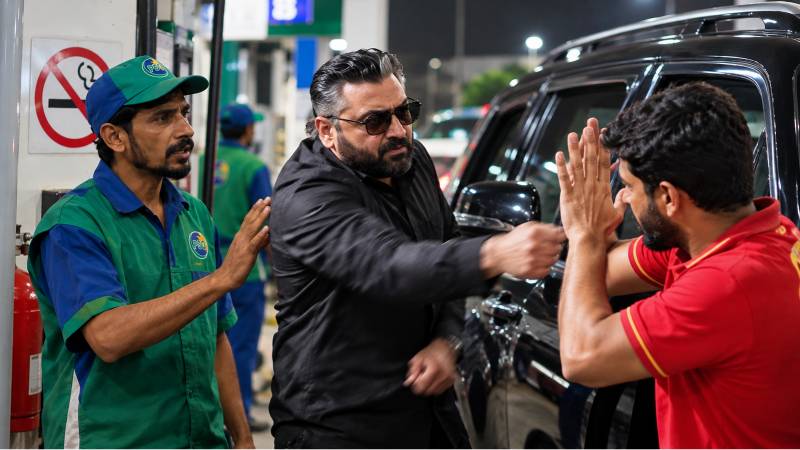
The recent incident in Lahore’s Jubilee Town, where a customer allegedly assaulted a petrol pump employee for asking him to stop smoking, exposes precisely this disorder. The worker was enforcing a precaution that protected the customer too. His supposed offence was to suggest that a rule could restrain someone who apparently considered himself entitled to disregard it.
We can condemn the assault, circulate the footage and exhaust our vocabulary of disgust but unless we confront the environment that cultivates such behaviour, our outrage will accomplish little beyond preparing us for the next recording. The question extends beyond why one man allegedly struck another. What has taught so many people that another person’s dignity is negotiable, while their own convenience is sacred?
Part of the answer sits at the commanding heights of public life. When those entrusted with authority evade accountability, manipulate institutions or demand exceptions for themselves, they deliver a lesson more persuasive than any sermon on citizenship. The lesson is simple: rules bind the vulnerable; influence liberates the powerful. Repeated often enough, this becomes a practical message in how to succeed.
This does not excuse individual cruelty. A person remains responsible for choosing violence but responsibility cannot stop conveniently at the lowest visible offender while the larger culture of exemption escapes examination. We cannot celebrate unrestrained power in public affairs and then express bewilderment when its admirers reproduce the same contempt at a filling station.
When we make cooperation optional for the assertive and enforcement dangerous for the conscientious, we disable the everyday mechanisms that keep us safe.
Here, the uniform of service becomes, in the aggressor’s imagination, evidence of inferiority. The worker may dispense fuel, carry food, guard a gate or clean a floor. His labour is required; his voice is resented. He is expected to exercise responsibility without asserting authority, to prevent danger without inconveniencing anyone, and to absorb abuse as though it were included in his wages.
A society that accepts this arrangement is attacking its own foundations. Collective life depends upon countless ordinary people performing duties that require others to cooperate. When we make cooperation optional for the assertive and enforcement dangerous for the conscientious, we disable the everyday mechanisms that keep us safe. The damage accumulates quietly until some catastrophe briefly makes negligence impossible to ignore.
The subsequent spectacle offers little reassurance. Reports described footage of the worker slapping the arrested suspect, shared approvingly by Punjab’s chief minister. The worker’s anger is understandable but official enthusiasm for retaliatory humiliation deserves scrutiny. A police station should provide protection, preserve evidence and uphold lawful procedure. Its authority is diminished when another slap becomes the public symbol of justice.
The suspect was subsequently discharged after the complainant informed the court that a settlement had been reached and he did not wish to proceed.
We should resist placing another burden upon the injured person by demanding that he become society’s heroic test case. He has already borne the assault. Institutions must make protection credible enough for an ordinary complainant to seek it without gambling his livelihood. A right that requires exceptional courage, money and endurance to exercise offers scant comfort to someone who possesses none of these in reserve.
Nor should a citizen need a viral video to become visible to the state. Cameras can expose wrongdoing, but public attention is an unreliable guardian. It moves on. The worker returns to his shift. What matters then is whether his employer supports him, whether complaints receive consistent attention and whether the next customer knows that violence will carry consequences regardless of who is watching. This is where the danger becomes existential. Societies do not have to disappear from the map to destroy themselves. They can hollow out their institutions, poison relationships and make decent conduct increasingly difficult. Buildings remain occupied and markets continue trading, while trust drains away.
People learn to keep silent, avoid involvement and seek personal protection through the very influence that has corrupted their common life. Reversing this decay requires restraint from those best placed to evade it.
The petrol pump worker was trying to prevent a fire. The response exposed a society already playing with one. Every exception secured through influence, every humiliation excused by status and every duty punished by intimidation feeds it. We cannot go on dismantling the restraints that protect us and expect civilisation to survive on indignation alone.