

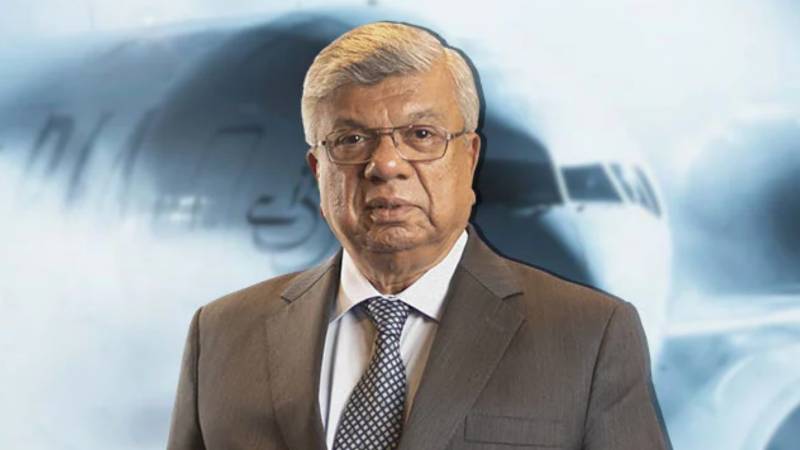
The ruling elite has finally concluded the state’s ownership of Pakistan International Airlines (PIA), handing over the reins to a consortium led by Arif Habib, a former top stockbroker turned industrial tycoon. This move marks a pivotal shift for the national flag carrier, which was once a premier regional airline boasting vast infrastructure and licences for nearly 70 global destinations. While the PKR 135 billion price tag for a 75 per cent stake has sparked intense public debate, aviation and financial experts suggest the deal is more strategic than it appears at first glance.
Rather than a simple buyout, the financial structure is designed to revitalise the airline’s crumbling foundations. The government is set to receive an initial PKR 10 billion in cash, a figure that could rise to PKR 55 billion if the consortium follows through on its plan to acquire the remaining 25 per cent of the shares. More importantly, the lion’s share of the bid, roughly PKR 125 billion, is earmarked for direct injection into the company. This capital is intended to modernise ageing technology, overhaul operational efficiencies, and fund the much-needed induction of new aircraft, offering a genuine path towards restoring the airline to its former glory.
Looking back, this privatisation marks the end of a chapter for an airline that once boasted an outstandingly glorious past and a superb upward trajectory. Pakistan International Airlines (PIA) was established in 1953 through the merger of Orient Airways with government backing.
In 1950, Orient Airways’ traffic had declined after losing routes to British airlines and local competitors, leading to government subsidies by 1952. The government established PIA with Rs 25 million. In 1955, Orient Airways merged into PIA, adding new routes such as Karachi–Quetta–Lahore and increasing passenger capacity by 50 per cent. PIA’s first international flight landed in London. The airline ordered new aircraft in 1956, and by 1958–59, passenger numbers rose to 208,000 under Air Marshal Noor Khan, marking a successful era for PIA.
PIA was not merely a carrier but a pivotal architect of global aviation. In 1974, its management defeated top European bidders to win the contract for Air Malta, providing the Mediterranean airline with its initial staff and aircraft. This legacy of excellence continued into the 1980s, when PIA played a foundational role in the launch of Emirates, providing technical expertise, training its first cabin crew, and leasing the very aircraft that started the Dubai-based giant.
Beyond these successes, PIA’s technical reach extended to Somali Airlines, Philippine Airlines, and Yemenia, while its historic 1964 flight to China established it as a vital diplomatic bridge. At its peak, PIA’s Karachi maintenance facilities were so sophisticated that they held top-tier certifications from the US and UK, allowing the airline to generate significant revenue by performing advanced safety checks and even manufacturing aerospace parts for global giants such as Boeing and GE.
Despite its current fiscal distress, Pakistan International Airlines (PIA) possesses the underlying potential to emerge as a profitable state-owned enterprise once again, provided its deep-seated structural issues are addressed. During a recent press conference, Privatisation Adviser Muhammad Ali characterised the airline’s current “bizarre” financial state as the result of a fifteen-year decline, culminating in a staggering Rs 500 billion in total losses between 2015 and 2024. The downward trajectory began in fiscal year 2014–15 with a loss of Rs 33 billion, which steadily climbed to Rs 67 billion by the end of the PML-N’s tenure, amounting to a four-year deficit of Rs 196 billion.
If Arif Habib can replicate his past successes, PIA may finally overcome its history of political interference and an overburdened workforce
A brief reprieve occurred during the PTI administration, when losses narrowed to Rs 35 billion by 2019–20; however, this recovery was abruptly derailed. The combined impact of the global COVID-19 pandemic, which crippled the international aviation industry, and a damaging, ultimately discredited statement by the then aviation minister, Ghulam Sarwar Khan, regarding “fake” pilot licences led to a sharp reversal. These factors, alongside broader economic instability, caused the deficit to surge to Rs 88 billion in 2022. The crisis peaked during the 2022–23 PDM alliance government with a record-breaking single-year loss of Rs 108 billion, underscoring the critical necessity for immediate and comprehensive reform.
Pakistan International Airlines (PIA) posted a pre-tax profit of Rs 11.5 billion in the first half of 2025, which a company source revealed was its first such performance for the period in about two decades, ahead of a planned privatisation of the national carrier later this year, a strong sign of revival.
One can vividly recall the chaotic state of recruitment within the national flag carrier during the first Benazir Bhutto administration (1988–1990). When retired Air Marshal Daudpota was appointed Chief Executive of PIA, the situation reached such a fever pitch that workers actually crashed through his office doors to demand appointment letters for their preferred positions and grades.
Unfortunately, this was not an isolated incident of mismanagement. A long history of ill-planned and ill-conceived leadership transitions has marred the airline’s performance across every government, whether elected or imposed, from the 1990s to the present day.
This instability was further compounded by a workforce that grew increasingly overburdened and a route map often determined by political interests rather than commercial viability. Chronic issues such as the failure to recover payments from travel agents, the overbearing influence of trade unions, and frequent strikes by the Pakistan Airline Pilots Association (PALPA) have all systematically contributed to the airline’s deep-rooted inefficiency.
Considerable attention is now focused on the Arif Habib-led consortium, a powerhouse group comprising AKD Group Holdings, Fatima Fertiliser, The City School network, and Lake City Holdings, with the potential addition of the military-owned Fauji Fertiliser Company (FFC). There is little doubt that Arif Habib possesses the visionary leadership required to spearhead such a monumental revival.
He cemented his legacy as a “financial wizard” back in 1993 by transforming the Karachi Stock Exchange from a chaotic “open outcry” system into a modern, scripless hub through the creation of the Central Depository Company (CDC). What began as a modest operation has since evolved into a vast corporate empire on M.T. Khan Road, spanning banks, top-tier fertiliser plants, and ambitious Real Estate Investment Trusts (REITs).
To support this transition, the government has provided an aggressive incentive package, including a 15-year tax holiday on fuel and dividends, while stripping Rs 7 billion in legacy loans from the balance sheet. In exchange, the consortium is legally mandated to inject Rs 116 billion in fresh capital by 2029, with Rs 73 billion of that investment front-loaded into the first two years to trigger an immediate turnaround. However, even for a seasoned innovator like Habib, breathing new life into a complex national entity such as PIA, with its deep-rooted structural and political challenges, remains a task of an entirely different magnitude.
This transition occurs against the backdrop of a landmark United Nations report from 2021, which revealed that “elite capture” benefiting the corporate sector, feudal landlords, the political class, and the military costs Pakistan $17.4 billion annually. By moving PIA out of the shadows of state mismanagement and into the accountability of the private sector, there is hope that this long-standing trend can be reversed.
If Arif Habib can replicate his past successes, PIA may finally overcome its history of political interference and an overburdened workforce. Though modernising the airline remains a gigantic task, this shift offers a rare opportunity for the national carrier to once again become a competitive force in the skies.