

Earlier this month, as drone and ballistic missile strikes hit deep into Saudi Arabia, Pakistan’s Defence Minister Khawaja Asif announced that the newly-minted Makkah Joint Defence Agreement (MJDA) could become operational if the kingdom’s borders were continuously violated. Pakistan’s military spokesman followed suit, proclaiming that Islamabad would “go to any extent” to defend its close ally.
These were and are empty words but they begot a response from Ansar Allah. In a televised address marking twelve years since they seized the capital, Sana’a, Ansar Allah leader Abdul Malik al-Houthi issued a direct warning to Pakistan and Türkiye against becoming mercenaries in the conflict for political or financial gains. Another senior Ansar Allah official, Mohammed al-Bukhaiti, went further and threatened to strike both nations with an “iron fist" if they intervened.
For decades, Pakistan has routinely issued sweeping guarantees of security to the House of Saud to keep its (Pakistan’s) financial lifelines open and secure remittances from its labour in the Gulf, especially Saudi Arabia. That’s because this country’s extractive elites just can’t stop lining their pockets but that’s a different debate. Meanwhile, the situation in the region is undergoing multiple changes and is at an inflection point. To think it’s business as usual is sheer foolhardiness. It is important, in fact, crucial, that policymakers in Pakistan whether in mufti or khaki, appreciate the situation rather than situating the appreciation. What follows here is a primer on Yemen, a country with a formidable geography and intractable history.
I penned a piece in this space on the MJDA in August so I shall not go into that discussion again. But to put the current analysis in perspective, let me reiterate that the collective-defence clause in MJDA remains the real problem. When Riyadh put together a coalition in 2015 to fight Ansar Allah, we did the right thing by placing the issue of support before the parliament, which, sensibly, decided against it. Riyadh was not happy but you can’t make everyone happy all the time.
The basic point, before I get to the Yemen primer, is simple: entering the military conflict in Yemen directly would be an egregious strategic folly. The statements make no sense because a red line that cannot be enforced must never be drawn. That is basic strategy, as basic as basic can get. Pakistan does not have the economic stamina or the domestic stability or even the military projection capabilities to sustain an expeditionary war against Ansar Allah who have proven to be an asymmetrical powerhouse against much stronger adversaries.
Now to the historical, geographic, and sociopolitical quicksand of Yemen, a country that makes Afghanistan’s notorious chaos look like a teddy bear’s picnic, which is a good reference given we can’t even handle Afghanistan.
Historically, Yemen has never truly been a monolithically united country. Its topography, defined by the jagged, impregnable Sarawat Mountains in the north, Harazi subrange, western and central highlands, eastern plateaus and unforgiving deserts and Kahboub mountain range near the Bab el-Mandab Strait, makes it a nightmare for military operations.
The geography, over millennia, has divided its peoples into fiercely independent tribal fiefdoms that have warred and continue to. Since the advent of Islam, for over a millennium, the northern highlands were dominated by the Zaydi imamate, a distinct branch of Shia Islam that values rebellion against unjust rulers almost as a tenet. Despite repeated attempts, neither the Ottomans nor regional empires could ever fully subdue the Zaydi heartland.
The fracture of modern Yemen — if we use the modern state benchmark — began in the mid-20th century and resulted in two starkly different political experiments. In 1962, nationalist military officers, backed by Egypt, launched a coup against the last Zaydi Imam. That sparked a brutal eight-year civil war. Saudi Arabia backed the Zaydis. The war destroyed the Egyptian military contingent and came to be known as Egypt’s Vietnam. But the officers prevailed and the war culminated in the formation of the Yemen Arab Republic in the north. Meanwhile, the south had evolved (and was evolving) under completely different conditions. Aden and the Aden Protectorate had been governed as a vital British imperial outpost since 1839.
The British wanted Aden as a strategic, secure coaling station to refuel steamships navigating the newly opened Suez-to-Bombay maritime trade route. Haines led a small force of warships and roughly 700 troops representing the British East India Company to storm and secure the port. With the post secured, Haines did not attempt a military conquest of the vast South Yemeni hinterland. Instead, and one has to give him full marks for understanding the tribal complexities, he secured cooperation through a policy of subsidies, bribes, diplomacy and informal protection treaties with the surrounding independent fiefdoms. This strategy laid the groundwork for what was eventually formalised as the Aden Protectorate. The Sheikhdoms feared the northerners and the Egyptians and British protection was helpful. The arrangement worked nicely until 1963.
Pakistan does not have the economic stamina, domestic stability or even the military projection capabilities to sustain an expeditionary war against Ansar Allah, who have proven to be an asymmetrical powerhouse against much stronger adversaries.
Starting ’63, southerners rose up in revolt against the British. In 1967, following a violent Marxist insurgency, the British withdrew from Aden and the region formed the People’s Democratic Republic of Yemen, Arab world’s first and only Marxist state. The formation of PDRY was preceded by a bloody local civil war between the National Liberation Front and the The Front for the Liberation of Occupied South Yemen. They had fought the British together but later turned their guns on each other. The details are not important for our present purpose.
When the Soviet Union faced dismemberment in the late 1980s, South Yemen lost its primary financial patron. The economic collapse, coupled with the discovery of shared oil fields along the ill-defined north-south border, forced a hasty unification in 1990 (oil was discovered in the Marib basin in 1984).
The unification was a marriage of convenience and was broken even as it was solemnised. By 1994, deep-seated political alienation and a sense of economic inequality in the south sparked a post-unification civil war. The northern military machine decisively crushed the southern secessionist movement within two months, cementing the autocratic and highly corrupt rule of President Ali Abdullah Saleh, a Zaydi himself but not part of the al-Houthi tribe.
For over three decades, Saleh famously described ruling Yemen as “dancing on the heads of snakes.” He managed by manipulating tribal alliances, embezzling billions and marginalising the Zaydi population in the north. This systemic marginalisation gave rise to the Houthis, a revivalist Zaydi movement founded by Hussein Badruddin al-Houthi in the 1990s. Between 2004 and 2010, Saleh launched six brutal scorched-earth wars against the Houthi tribe in their native Sa’dah governorate. Rather than destroying them, even though Badruddin was killed early, these conflicts hardened the insurgent group into an effective guerrilla fighting force.
Fast forward to the Arab Spring in 2011. Mass protests forced Saleh to step down in favour of his vice president, Abdrabbuh Mansur Hadi. Hadi’s weak transitional government failed to address basic resource scarcity, inflation and tribal grievances. Capitalising on the political vacuum, the Houthi tribal forces, now Ansar Allah, formed an alliance with their former enemy, the ousted Saleh, and launched a lightning offensive. Saleh retained influence in the army and was helpful. Ansar Allah itself had become an effective fighting force through links with Iran’s Islamic Republican Guard Corps. By late 2014, they captured Sana’a, effectively ousting Hadi, who fled to Aden.
Alarmed by Ansar Allah’s advances and the group’s links with Iran, Saudi Arabia assembled a multi-nation coalition in March 2015 and launched a massive air campaign. The coalition predicted that the war would last a few weeks. Instead, it dragged on for years and created one of the world's worst humanitarian crises. The campaign eventually fractured from within due to Saudi-UAE split: Riyadh backed the Hadi government in the north, while Abu Dhabi funded and armed the Southern Transitional Council (STC), which sought independence for the south.
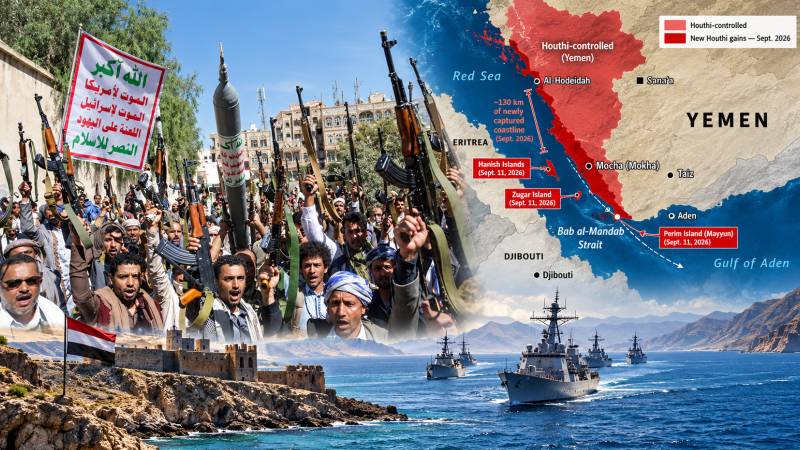
A fragile, unwritten UN-brokered ceasefire offered a brief respite beginning 2022 (that truce has completely dissolved). Driven by shifting regional dynamics, a provocation by Saudi-backed government and their opposition to western maritime presence, Ansar Allah has launched a new round of warfare. They have successfully established a naval blockade of Saudi Arabia, cutting off key maritime corridors and seizing complete control of the Yemeni Red Sea coast and the strategic Bab el-Mandeb Strait. Any keen observer of Yemen would know that I have eschewed many details. But the essential point of this primer is to give the policymakers in Pakistan a sense of what Saudi Arabia is dealing with and why Pakistan should stay away from getting involved in this conflict.
Yemen’s geography has divided its peoples into fiercely independent tribal fiefdoms, while its mountainous terrain has repeatedly made the country exceptionally difficult to subdue through conventional military operations.
Another important point to flag is that Ansar Allah is not a ragtag tribal militia. They fly their own flag, seek recognition and are a highly structured and disciplined multidimensional military force. Over a decade of warfighting has helped them evolve from an insurgent movement into a de facto state authority with institutionalised command lines. They possess distinct branches of armed service, combining specialised infantry corps, a disciplined internal security apparatus and complex intelligence units.
Their capabilities span a versatile spectrum of modern and asymmetric warfare. They have mastered the art of low-cost engineering (thanks to the IRGC), transforming commercial technology into lethal, long-range loitering munitions and precision anti-ship ballistic missiles. Their tactical naval units execute advanced blockades, while their air defence units present a continuous threat to regional air dominance (they troubled the US and have downed a Saudi F-15).
Just like the IRGC’s mosaic defence strategy, Ansar Allah has a decentralised, subterranean command structure that helps them mitigate the effects of conventional, aerial SEAD (suppression-of-enemy-air-defences) operations. The deeply ingrained martyrdom culture helps, as does the generationally hardened experience in a jagged mountain terrain. By all evidence, they operate with a cohesion that rivals seasoned conventional armies.
To put it simply, Ansar Allah is a complete contrast to the internationally-recognised and Saudi-backed eight-seat Presidential Leadership Council, a body whose members lack initiative, are micromanaged by Riyadh and have differing interests. The internal strife was on display with the STC episode. This is also reflected in the troops they field to face Ansar Allah. As I write these lines, Ansar Allah troops have already captured the Red Sea coastline, the islands of Perim, Hanish and Kamaran and the Tihama plain that lies west of Taiz and Lahij mountains in the Sarawat Range. The axis of their advance indicates that they want to occupy that high ground and perhaps advance on Aden. That might also bring in diminishing returns because they would be in Sunni-Shafi’i territory. Last time they besieged Aden, Riyadh jumped in. Let’s see how it pans out this time.
Final word: Riyadh has no good choices. It can’t win or even subdue Ansar Allah militarily. It can’t bank on the much-hyped MGDA. This is why Mohammad bin Salman has been beseeching Donald Trump (already trumped by Iran) to jump in. Trump nearly did before better sense prevailed (quite an achievement with Trump).
Corollary: if the US is reluctant to get involved in Yemen, it stands to reason that policymakers in Islamabad should give the idea a very wide berth and then some more.
The only way Pakistan can contribute is to speak with Tehran. I get a sense that is being done. There are two problems with this approach, however: Ansar Allah, while allied with Iran, is an independent group with its own domestic agenda. It is not, as is often erroneously assumed, an Iranian proxy. Two, while the current war has internal Yemeni and Yemen-Saudi dynamics, it must also be situated in the broader conflict. Both levels make it intractable.