

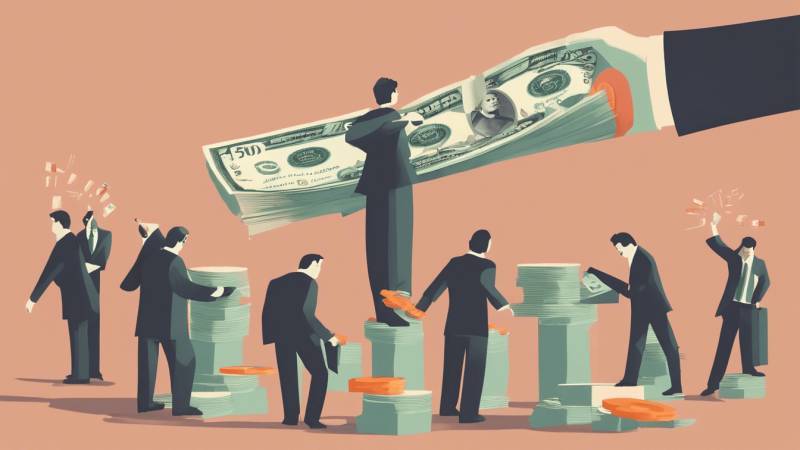
We should set our house in order and stop blaming lenders and donors. An undeniable reality is that the Pakistani nation is the most heavily taxed in the entire region and the citizens get neither education nor health facilities from the State, what to speak of social protections like pension for all, social security, disability and income support etc., out of taxes paid by citizens. There is overwhelming reliance on indirect taxation, even under the garb of direct income taxation through withholding taxes, presumptive and minimum tax regimes on several transactions, without evaluating its impact on the economy and life of the less privileged sections of society—The News on Sunday [Special Report on Taxation], October 10, 2010
The debates and discourses concerning the political economy of tax reforms in Pakistan, going unabated during the last many decades, lack objective analyses and rational approach. Unfortunately, the so-called “experts” on Pakistan’s taxation system, at home and abroad, have never bothered to comprehend the basic elements of a repressive and unpredictable tax system prevalent in Pakistan, let alone suggesting pragmatic ways and workable plan to reform it.
The popular slogan of all experts (sic) has been more taxes to improve tax-to-GDP ratio, but no concern for utilisation of taxes collected, and ruthless abuse of public money for providing extraordinary perquisites and benefits to the ruling parasitic elites. Many cite what is prevalent in the West without studying and considering the mundane realities of Pakistan where the predatory State is not providing even security of life and property, what to speak of taking care of fundamental needs of all citizens—the denial of fundamental right of life, clean drinking water, and free education to children under Article 25A of the Constitution of Islamic Rupublic of Pakistan [Constitution] are the most glaring examples of State’s apathy.
In civilised, social democratic countries personal income tax law recognises the cost of living alone or with family—expenses to nurture children are always considered. Their law, thus, allosws deductions/allowances according to size of family. In Pakistan, Federal Board of Revenue (FBR)—the de facto legislator in tax matters—not only denies any such allowances or deductions, but also extorts advance income tax even from the lower-income earners and their family members having no income, on facilities like mobiles. Adding insult to injury, FBR expects them to file tax returns to get refund of the money withheld as tax, whereas the cost to get it will always be much more than the amount due and chances of harassment after filing return are obnoxiously high.
40 percent of Pakistan’s population now lives below US$2 per day, which is categorised as extreme poverty
Imposition of regressive, high-rate taxes, especially sales tax on essential items, in an underdeveloped, informal and struggling economy has been the favourite tax policy (sic) of FBR. One wonders, if it really can be called a policy! In reality, there have always been haphazard, loathsome, horrifying, and irrational tax measures for extracting more money from the hapless citizens for meeting so-called “enhanced targets”—much below the actual tax potential of Pakistan. Revenuecracy has been concealing its failures, using the most preferent excuse of many in the Land of Pure: “on the dictates of International Monetary Fund (IMF) and World Bank”! The disastrous results of this incorrigible behaviour was analysed in detail in Tax reforms: Agenda for Self-Sustainability in The sordid story of tax reforms.
The real issue of taxation in Pakistan is lack of a judicious balance between direct and indirect taxes. Appeasing the rich and mighty and lavish spending on the luxuries of elites is the main cause of the huge budgetary gap. Such wrong, unabated policies have been continuously increasing the misery of the people; 40 percent of Pakistan’s population now lives below US$2 per day, which is categorised as extreme poverty. Non-collection of taxes from the rich and generously extending exemptions/concessions/amnesties to them is the root cause of our unjust tax system.
The failed experience of tax reforms in Pakistan is well documented in a book, The Role of Taxation in Pakistan’s Revival, edited by Jorge Martinez-Vazquez & Musharraf Rasool Cyan, containing nine chapters. These are, in fact, studies conducted for 7-year-long [December 7, 2004 to December 31, 2011] for Pakistan Tax Administration Reform Programme (TARP), carried out with total cost of US$149 million, out of which US$ 102.90 million came as loan from World Bank.
The TARP was a great failure as on its conclusion not only did tax-to-GDP ratio fall substantially, but there was also a tremendous decrease in the number of return filers. None of the studies in the book has highlighted the most painful aspect of Pakistan’s oppressive and unjust tax system. On the one hand, the State is least pushed to provide free education and health facilities and on the other, individual income taxation is insensitive to family circumstances to determine ability to pay, in utter violation of Article 3 of the Constitution.
In their book, Jorge Martinez-Vazquez & Musharraf Rasool Cyan failed to dislodge the claim of FBR that share of direct taxes was about 40% in total tax collection. They blindly adopted the figures of FBR without examining their authenticity. They could not discern that under Pakistan’s Income Tax Ordinance, 2001, overwhelming collection was through indirect taxes that are camouflaged as direct taxes. These presumptive/minimum and transactional taxes have nothing to do with the income of a person—the incidence of these is passed on to the clients/customers.
No expert hired by World Bank or IMF as the book shows was aware of the reality, or had not intentionally highlighted it, that the main incidence of the taxes in Pakistan has been on the middle-low-income groups, while the beneficiaries of taxpayers’ money are rich members of the militro-judicial-civil complex and public office holders who get enormous tax-free perquisites and benefits. The State, captive in the hands of a few, is facing enormous challenges on fiscal front.
The IMF in its parleys with the Pakistani team has never raised the issue of violation of constitutional provisions and burdening the lower-income groups with unprecedented taxes on petroleum products—recently through a Presidential Ordinance petroleum levy is raised to Rs. 80 per litre. Why should they? They are mainly concerned with getting their own money back, no matter if it means sucking blood of the common citizens. The fault of course, mainly lies with our ruling elites, who beg before them, thrive on borrowed funds and taxes paid by the masses. The existing tax system is not taxing the super-rich and main collection is from indirect taxes. Resultantly, income and wealth distribution disparities are rapidly widening. Under the given scenario, efforts are needed both at federal and provincial levels to enlarge the size of the pie by shifting to growth-oriented taxation—see details in Chapter 16 of Return to Prosperity by Arthur B. Laffer & Stephen Moore.
Though many authors have presented suggestions for reforming the existing tax system of Pakistan, a concrete study for raising taxes to the level of Rs. 30 trillion at federal and Rs. 4 trillion at the provincial levels is available online—Towards Broad, Flat, Low-Rate & Predictable Taxes [Third Edition, Prime Institute, November 2024]. The study also recommends a comprehensive system of reforms at all levels ensuring social security payments to citizens through a federalised tax authority. Obviously our more-loyal-than-the-king stalwarts sitting in Ministry of Finance and FBR want more funds from abroad— hooked on “advice” and “assistance” from foreign masters, IMF & World Bank that miserably failed in the past.
Pakistan’s tax revenue potential would reach 26 percent of GDP, if tax compliance were to be raised to 75 percent, which is a realistic level of compliance for lower middle income countries
It is evident from the ongoing World Bank Pakistan Raises Revenue (PRR) Project wherein an appraisal paper, has termed “vested interests lobbying for tax exemptions, internal tensions and wariness of change among the FBR staff, and potential disputes affecting provinces’ readiness to collaborate with the FBR as high-risk factors” for tax reforms.
It may be mentioned that the total cost of Pakistan Raises Revenue (PRR) Project was originally estimated at US$1.6 billion, of which counterpart contribution is $1.2 billion and IDA financing was $400 million. Now one year extension with more funds of US$70 million are requested for FBR transformative plan!
In the past as well, World Bank, Asian Development Bank (ADB), erstwhile Department for International Development (DFID) now replaced with Foreign Commonwealth & Development Office (FCDO) , and others gave a lot of money to Pakistan for reforms, yet things were changed only for the worse on fiscal/tax front.
Pakistan Raises Revenue (PRR) Project, designed to “sustainably increase domestic revenue by broadening the tax base and making it easier for citizens and businesses to pay their taxes”, has also failed to deliver despite making the tall claim: “This will make it possible for Pakistan to finance the investments in infrastructure, education and health needed for the country to accelerate and sustain growth”.
As we all know the lion’s share of huge funding has gone in the pockets of so-called foreign experts who have no idea of our mundane realities and rest as expected has been wasted by untrained workforce, we have in all tax agencies at federal and provincial levels.
There is yet no research-based study available with the World Bank for improving tax administrations at all levels and growth-oriented tax reform agenda. The World Bank in Pakistan Revenue Mobilisation Project has not shown any indication of taxing the rich though rightly noted as under:
Pakistan’s tax revenue potential would reach 26 percent of GDP, if tax compliance were to be raised to 75 percent, which is a realistic level of compliance for lower middle income countries (LMICs). This means that the country’s tax authorities are currently capturing only half of this revenue potential, i.e. the gap between actual and potential receipts is 50 percent. The size of the tax gap varies by tax instrument and by sector. The tax gap in the services sector is larger than in the manufacturing sector (67 percent vs. 46 percent respectively) and it is larger for the GST/GSTS than for income tax (65 percent vs. 57 percent, respectively).
The World Bank, at the beginning of the PRR Project in its appraisal report noted that our tax system was complex because of overlapping jurisdictions with different laws, exemptions, and frequent policy changes. It rightly diagnoses that the Constitution assigns income taxes (except for income derived from agriculture), General Sales Tax (GST) on goods, customs duties, federal excises, and the Capital Gains Tax (CGT)—application to immoveable property is questionable—to the federal level.
FBR is simply incorrigible and needs to be dismantled and replaced with a modern, professional, automated, and autonomous federalised tax agency
These taxes are collected by FBR. The Constitution assigns the following taxes to the provinces:
GST on Services (GSTS), tax on professions, agricultural income tax, motor vehicle tax, urban immovable property tax (UIPT), and other taxes related to real estate (e.g. estate duty, gift tax, stamp duty, capital value tax etc.). This tax assignment fragments Pakistan into five markets in the services sector. The withholding tax regime is also problematic because of the administrative burden it places on businesses that are obliged to withhold taxes, and because it distorts economic actors’ incentives.
The World Bank estimated Pakistan’s tax gap at 10% of the GDP or Rs. 3.8 trillion. At that point of time, our tax-to-GDP ratio was 12.6% that according to the World Bank should have been 23%. Among the 13 federal countries, Pakistan is second to last in the performance of provincial governments on tax collection. While the services sector accounts for 60% of GDP, it contributes only 5% of the GDP in taxes and about 11% in sales tax collection. The World Bank analysis is that Pakistan has a complex tax system of over 70 unique taxes and at least 37 government agencies administering these taxes. It may be recalled that the World Bank in 2004 extended to Pakistan $125.9 million, including IDA credit of $102.9 million and a UK DFID grant of $23 million, for Tax Administration Reform Project (TARP).
The objective of TARP was to improve “the integrity and fairness of tax administration by improving organisational efficiency and effectiveness of the revenue administration”. Tragically, tax-to-GDP ratio in 2012, the last year of extended World Bank funded TARP, dipped to 8.2% from 10.6% in 2005 when the programme started!
The World Bank in its report, “Implementation, Completion and Result Report” on TARP observed that “the current narrow-base of general sales tax (GST) in Pakistan remained almost entirely unchanged throughout 2005-2012, despite efforts to overhaul the indirect taxation structure by introducing a reformed GST featuring few exemptions and wide coverage of goods and services”.
World Bank in none of its appraisal reports has mentioned mafia-like operations that include amongst others, missing containers scandal, refund scams, smuggling of goods, currency and narcotics, under-invoicing, and abuse of the legal tool of issuing Statutory Regulatory Orders (SROs) to favour the rich and mighty. Pakistan aptly fits in the concept of a “soft state”—famously articulated by the Nobel Laureate, Swedish sociologist Gunnar Myrdal in his 1968 three-volume work, Asian Drama: An Inquiry into the Poverty of Nations. It is a broad-based assessment of the degree to which the state, and its machinery, is equipped to deal with its responsibilities of governance. The softer a state is, the greater the likelihood that there is an unholy nexus between the lawmaker, the law keeper, and the law breaker.
Pakistan is facing multiple challenges on the economic front: reckless borrowing by successive governments for meeting its day-to-day expenses, lack of resources for rapid infra-structure improvements, trade deficits, fiscal deficit, inflation, balance of payments, and what not. In these challenging times, we want more loans, even from World Bank to reform our tax system!
Faced with grave challenges to combat terrorism, money laundering operations funding the militants and criminals, and the problem of ever-growing black money, which according to independent experts is about three times of the documented economy, our political leadership and tax officials opted for yet more foreign-funding of US$ 70 billion for FBR’s never-ending transformation plan (sic). FBR is simply incorrigible and needs to be dismantled and replaced with a modern, professional, automated, and autonomous federalised tax agency—see details here.
The main emphasis of the incumbent Government is still not on low-rate taxes on the broadest possible tax base, taxing the rich and mighty through an alternate minimum tax and property tax according to the size of the house/office. Along with these measures, it is vital to bridge the monstrous tax gap, which according to official claims is Rs. 7 trillion, the collection of which is essential as it can wipe out the entire fiscal deficit. This is, however, not possible unless federal government, after consultations with provinces, introduces harmonised sales tax on goods and services and establishes a single agency to monitor all inflows and outflows and document all the transactions relating to acquiring of assets.